


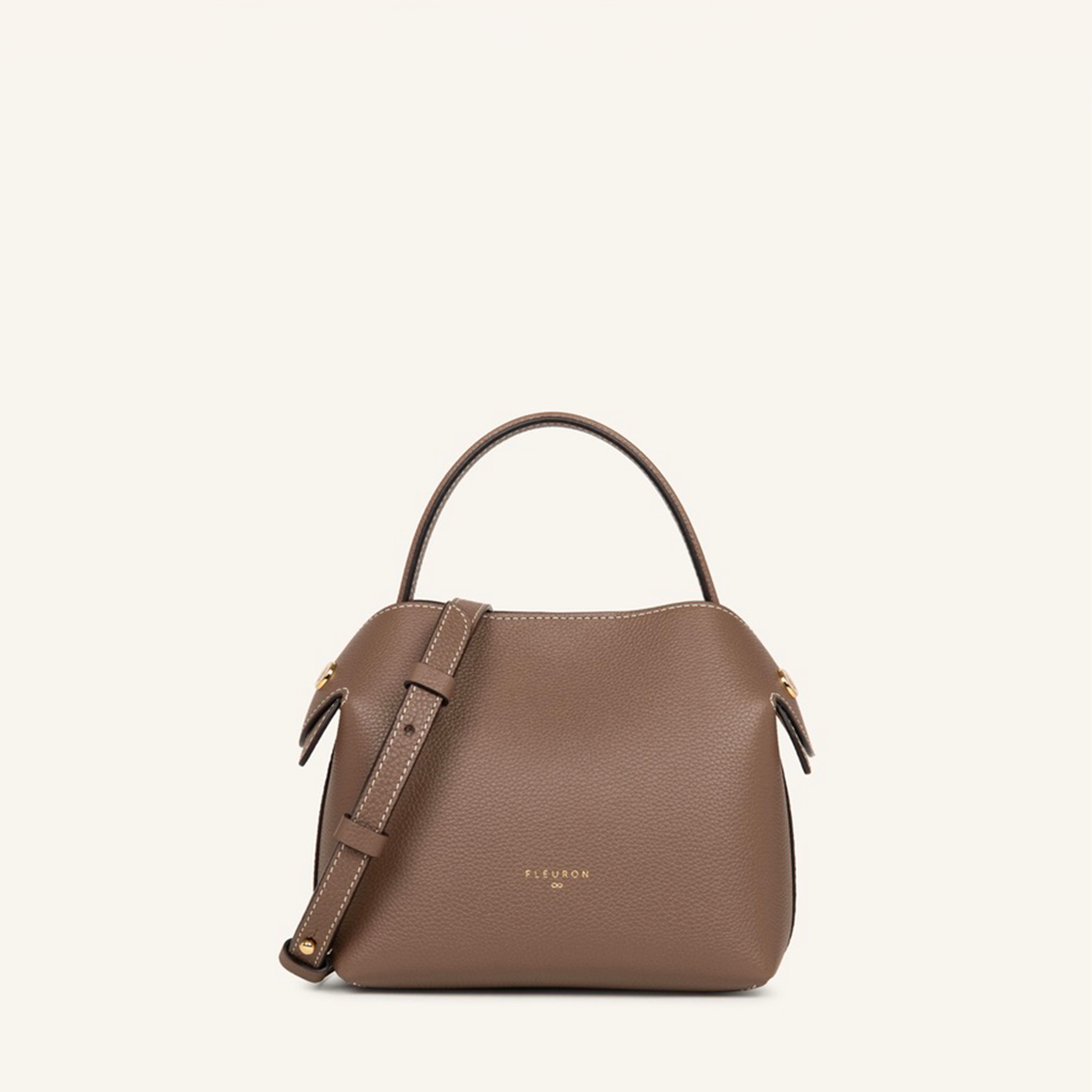
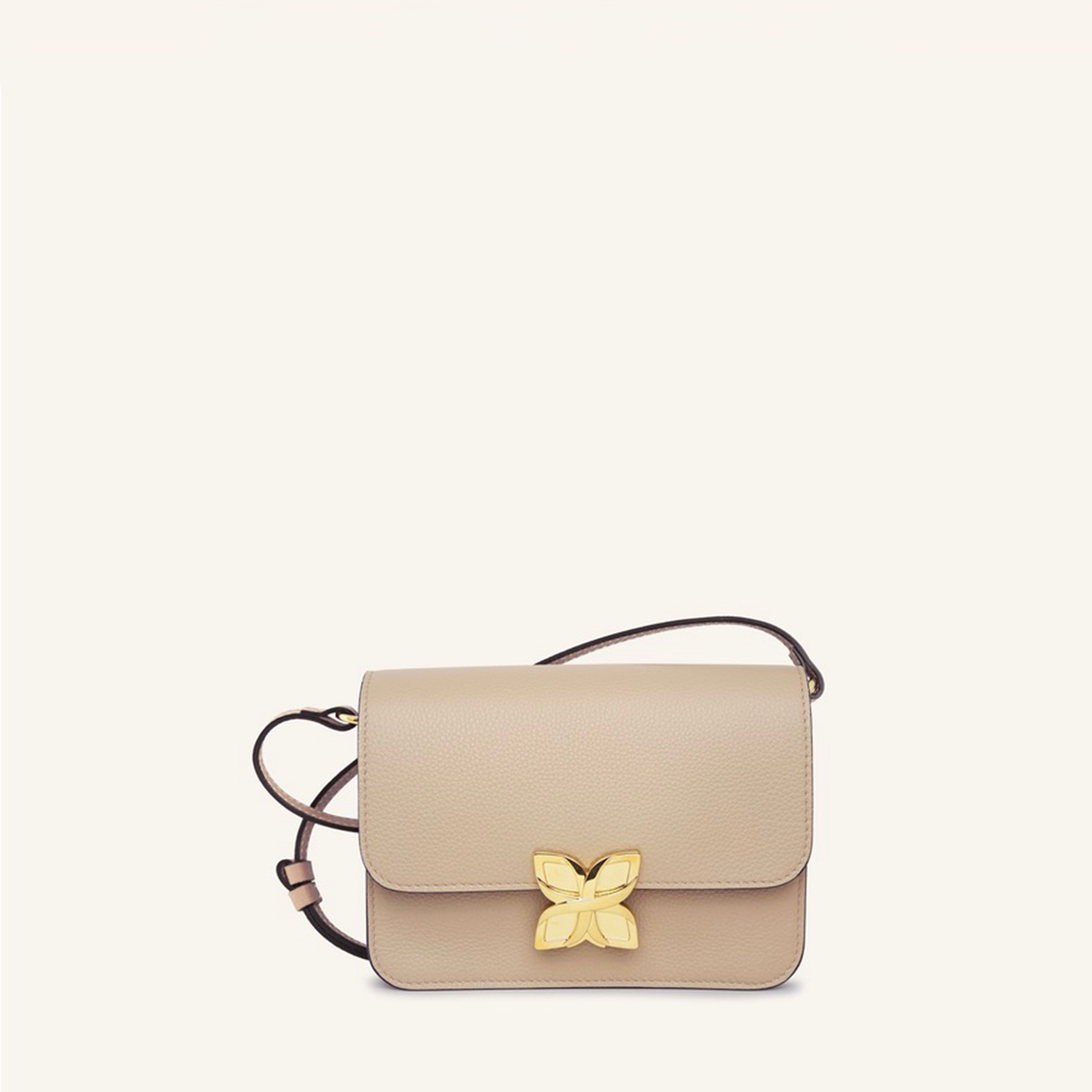
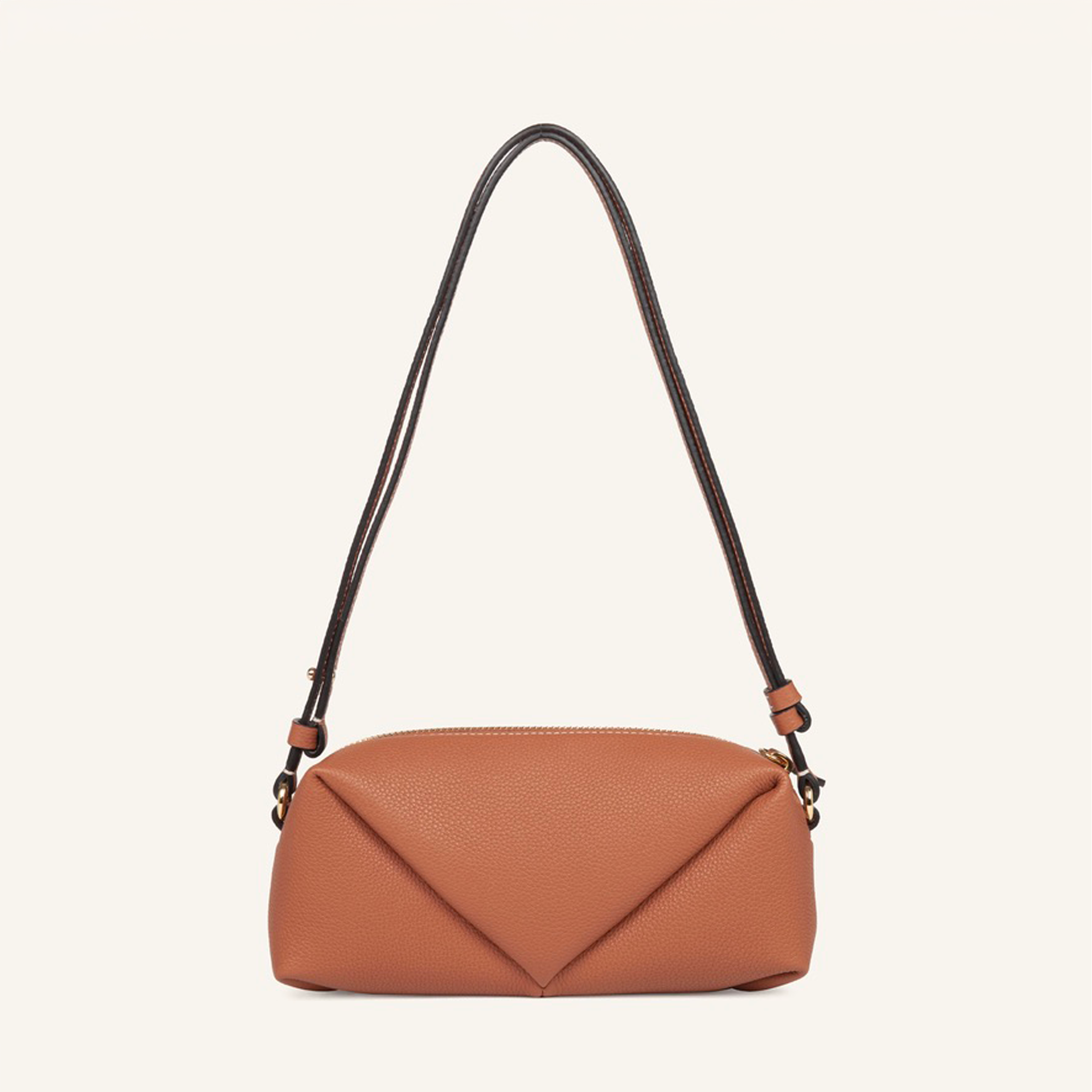
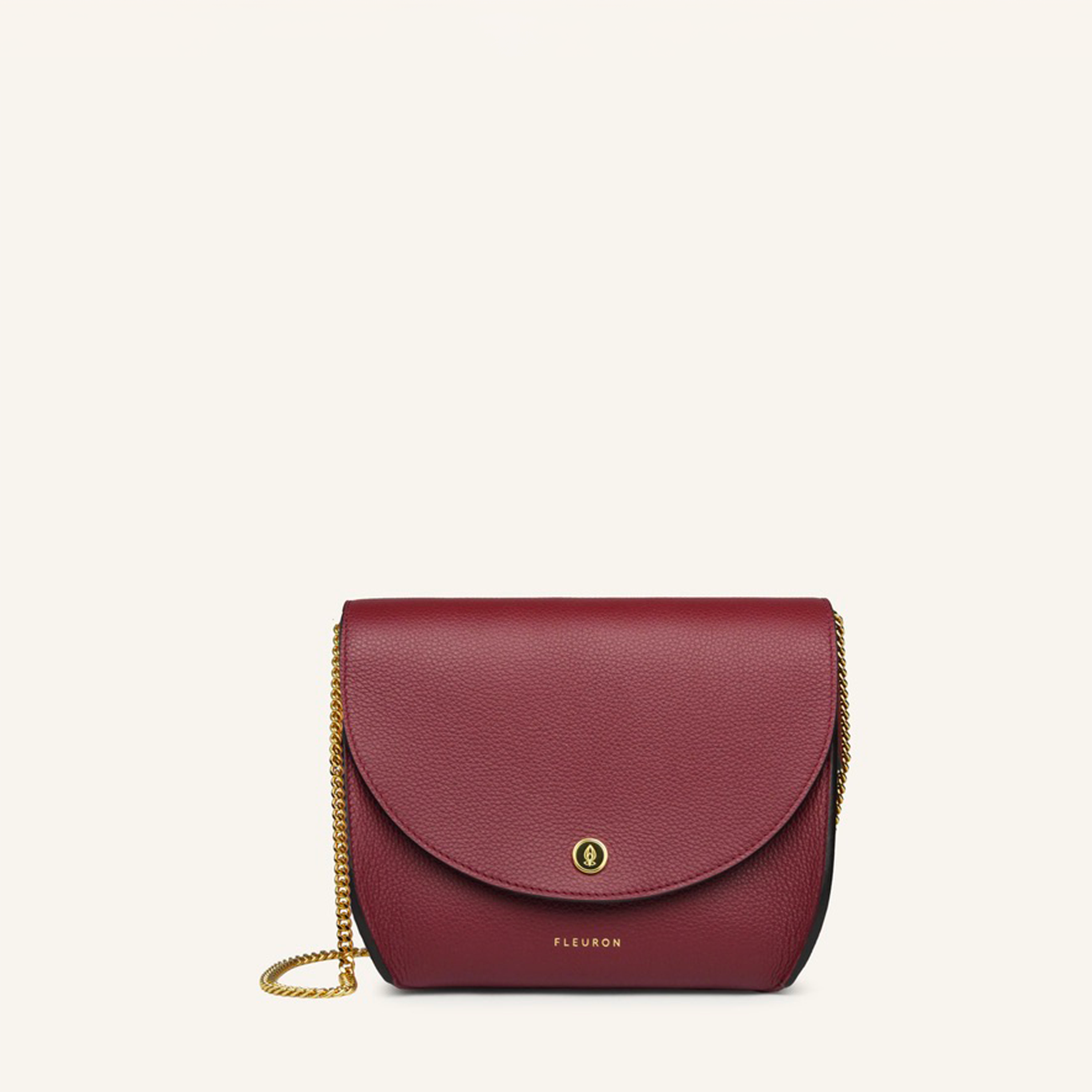
"Genuine leather", "full grain leather", "Italian leather".
On a label, every leather looks alike. In the hand, no two are equal.
We are often compared to other bags, similar in shape, close in price. Yet the comparison ends where the material begins. Here is what sets us apart, and why.
One hide, several leathers
A tanned hide is not a uniform material. It is made of several layers.
The most precious is the grain: the top layer, dense and fine, which carries the natural surface of the skin. It gives leather its strength, its touch and its ability to develop a patina.
Beneath the grain lies the corium. When a thick hide is cut through its thickness, the result is split leather: a lower, more fibrous layer, stripped of its original grain. To give it the look of a noble leather, it is often covered with a film, sometimes textured.
Full grain or corrected grain
Full grain leather keeps its original grain intact: neither sanded, nor buffed, nor split. Nothing has been taken from its surface.
Corrected grain leather has been sanded to erase surface flaws, then covered with a finish. Its original grain has been removed.
It is therefore not the pattern that defines full grain leather, but what has, or has not, been taken from its surface. A leather can receive a grain and remain full grain, as long as its surface has been neither sanded nor coated.
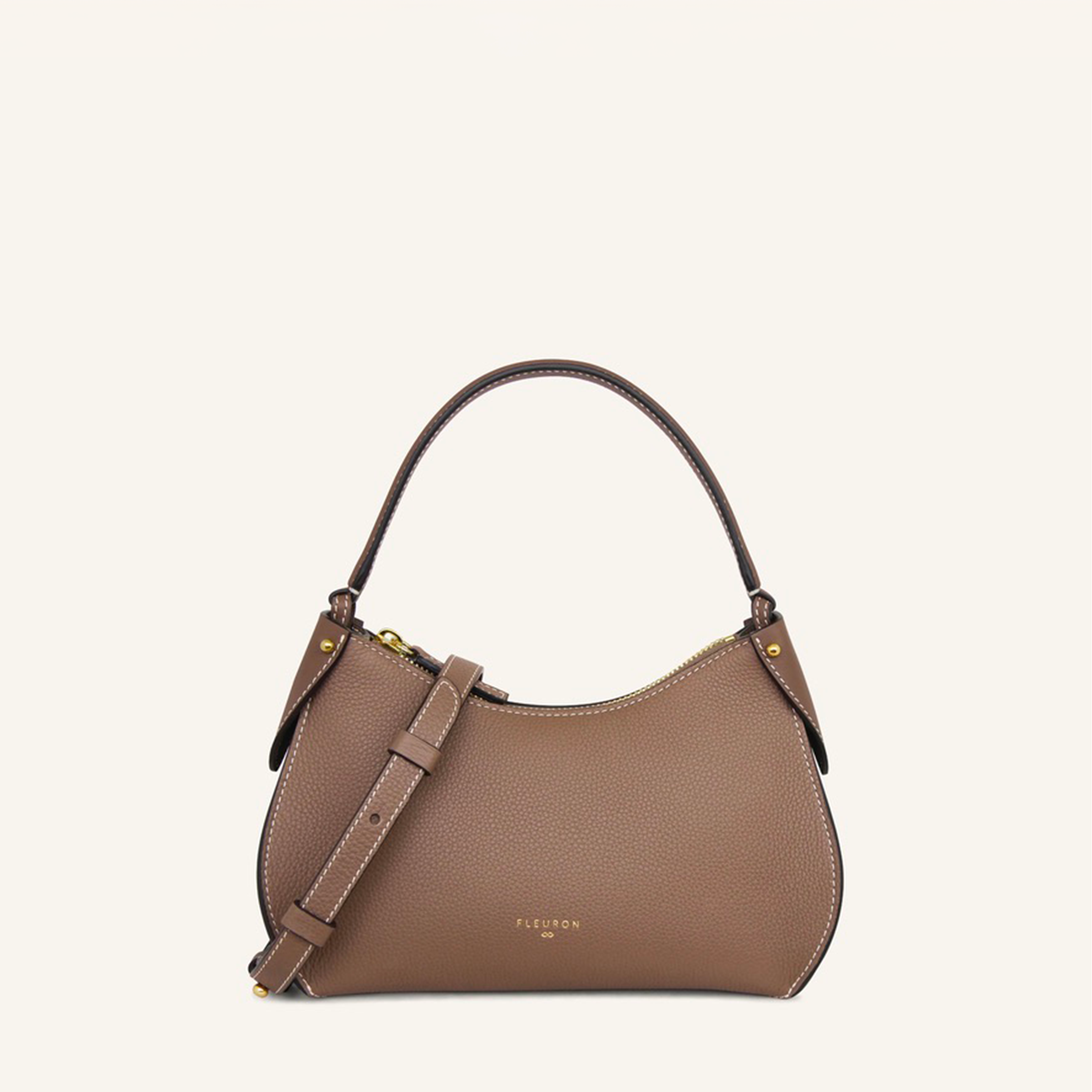
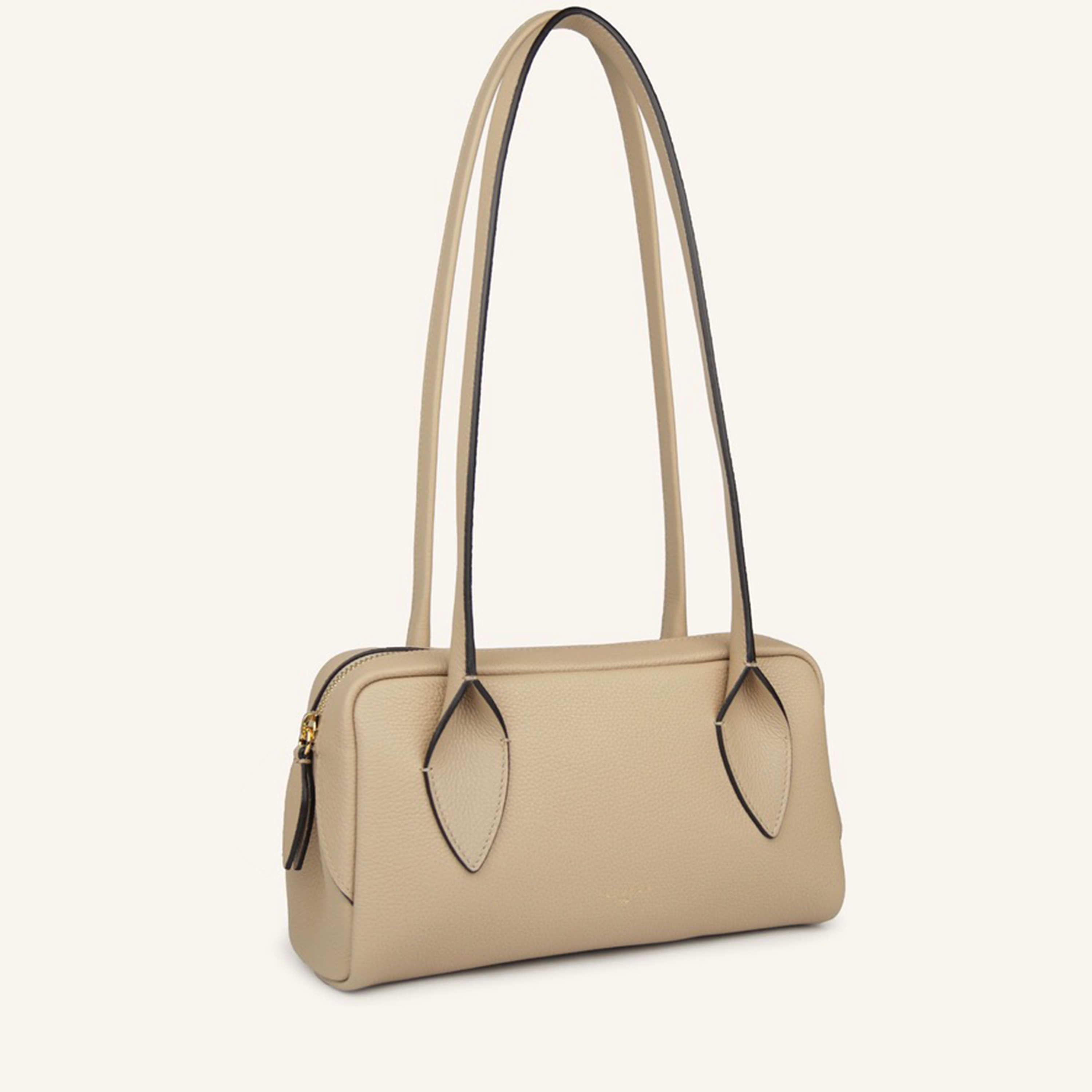
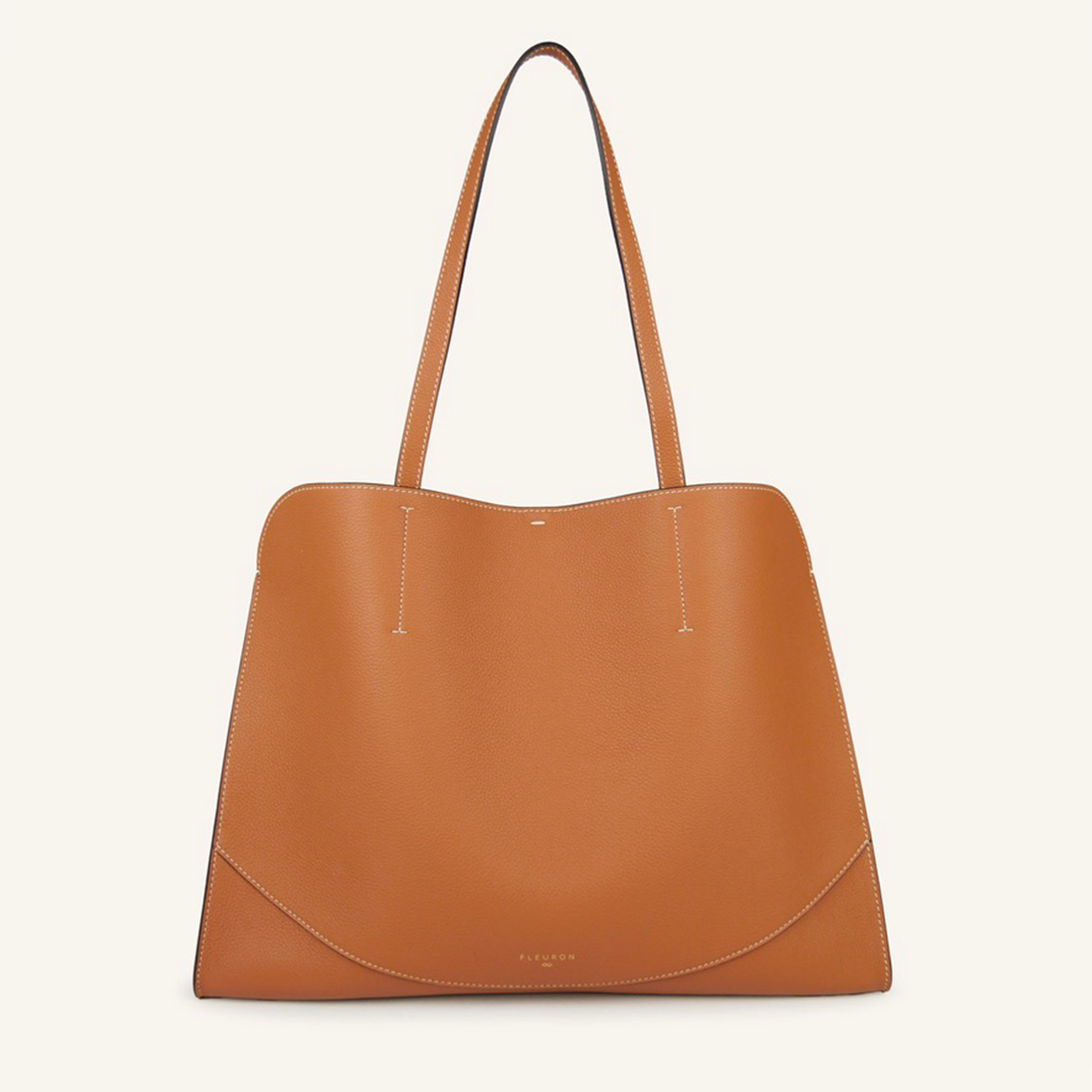
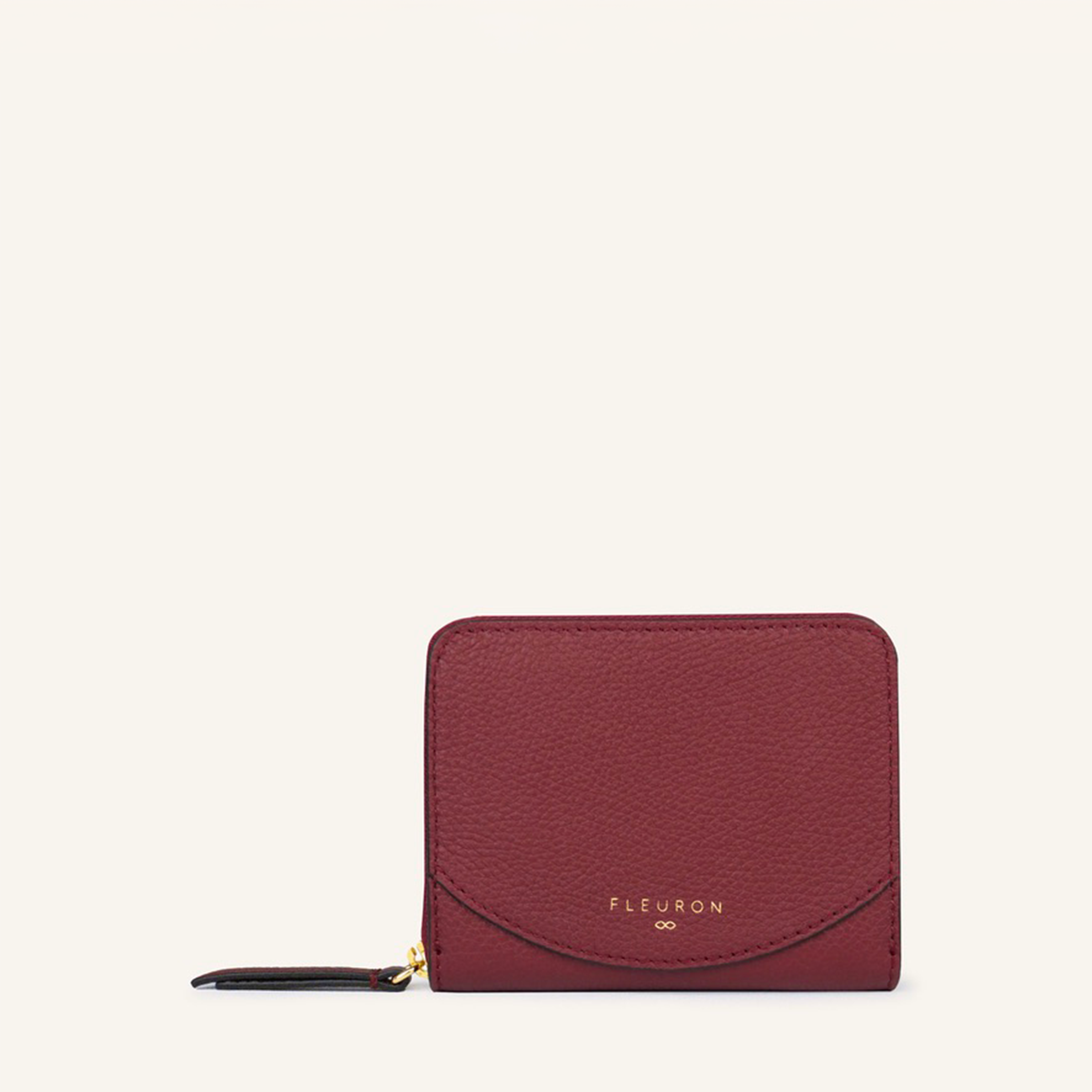
At Fleuron, our calf leather is full grain, in both smooth and grained finishes. Two finishes, one material.
Calf or cowhide
This is where the least visible, and most decisive, difference lies.
Cowhide comes from adult cattle. The skin is thicker, the grain more pronounced and irregular. It is sturdy, plentiful, and far more affordable.
Calfskin comes from a young animal. The skin is finer, the grain tighter and more delicate. Rarer and more demanding to work, it offers a natural suppleness, a drape and a glow that cowhide cannot reach, even in full grain.
Two bags can therefore both carry the words "full grain leather" and have nothing in common. One is cowhide, the other calf. The difference cannot be read on the label. It is felt in the touch, the weight, the movement, and it is confirmed over the years.
Why we are not comparable
Fleuron uses only full grain calf leather, sourced from two certified tanneries, one Italian and one Spanish. It is a more costly choice, and one we stand by.
A cowhide bag and a calfskin bag may look alike in a photograph. They do not age the same way. They are not worn the same way. They do not make the same promise.
We do not claim to do better than others on their ground. We have simply chosen different ground: that of the material.
How to recognise quality leather
A few gestures are enough to stop relying on the label alone:
- Ask about the animal. "Full grain" describes the layer, not the hide. Only the word "calf" tells you about the fineness of the material.
- Ask whether the surface was sanded. It is sanding, not the pattern, that turns full grain into corrected grain.
- Feel the edge. Split leather shows loose fibres or a visible coating along the edge.
- Bend gently. Calf folds with suppleness and fine creases. A thick or film-coated leather marks more heavily, sometimes with cracks on the surface.
True luxury lies in the material
This is also why Fleuron holds no sales and no promotions. A fair price is measured by what it contains.
Discover why full grain calf leather makes all the difference.